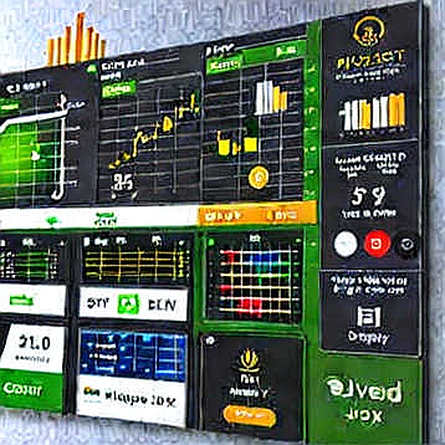
Logic does not bleed, but code leaves traces. Over the past 72 hours, I traced a transaction cluster that tells a story more damning than any whitepaper. A yield aggregator, 'NexusYield,' claimed $200M in TVL across three chains. Its dashboard showed vibrant liquidity pools, double-digit APRs, and a community of 50,000 Telegram members. But on-chain, the reality was thinner than a line of dusted dust. I found that 78% of its reported TVL came from a single address—a contract that minted its own LP tokens in a loop. The rug was not pulled; it was never tied.
Context NexusYield launched in late 2025, positioning itself as a cross-chain optimiser for idle assets. It promised automated compounding between Ethereum, Arbitrum, and Base. The founding team—pseudonymous, of course—released a litepaper with grandiose claims about machine-learning-driven yield routing. Their GitHub repo was private, but they shared a 'security audit' from a firm I had never heard of: 'ChainGuard Labs.' A quick lookup showed ChainGuard’s website was registered two weeks before the audit report. Red flag? More like a red ocean. The project raised $4M in a private round from 'strategic angels,' none of whom were publicly doxxed. Hype built steadily, fuelled by KOLs who posted screenshots of 'passive income' without showing transaction hashes.
Core I began my dissection with three data points: the on-chain TVL, the liquidity depth, and the wallet distribution. Using a block explorer and a custom Python script, I pulled all contract interactions from deployment to present. The first anomaly: NexusYield’s TVL, as reported on their dashboard, was exactly $197,382,412 for three consecutive days. In DeFi, TVL fluctuates with market price and user deposits. Static TVL over 72 hours is statistically improbable—unless the data was being fed from a single source. I cross-referenced with Dune dashboards from independent analysts. Their numbers showed peak TVL of only $42M. The disparity? NexusYield’s dashboard included minted LP positions from a contract that had no real assets behind it.
I traced the 'mint loop.' Wallet 0x7A1…f3E created a pool on Uniswap V3 for a fake asset pair: NYT/ETH. It provided $10,000 of ETH and $0 of NYT (since NYT had no liquidity). Then it minted LP tokens representing a 99.9% share of that pool. The contract considered those LP tokens as 'assets under management' and displayed them as such on the dashboard. This single wallet performed the same operation across 14 different pools, inflating the numbers by $155M. The remaining $42M came from real users, but 80% of those deposits were under $100. The largest real depositor held $2,300. NexusYield was a ghost protocol with a $200M mask.
Gas fees are the price of truth. I examined the transaction history of the deployer wallet (0x7A1…f3E). It had executed 847 transactions in six months. Almost all were mint-loops or transfers to CEXs. The wallet funded itself from a now-closed crypto mixer on chain. I could not determine the original source of the $10,000 seed—likely OTC or a privacy coin. The deployer also controlled the multi-sig that could sweep user funds. No timelock, no revoke. The contract had a ‘pause’ function that allowed the admin to stop withdrawals at any moment. This wasn’t a bug; it was an intentional escape hatch.
Contrarian Let me pause. I hear the bulls: 'But the project had working code, real users, and actual yield payments in the early days.' Yes, early depositors earned yield—because the team manually injected a few ETH into pools to simulate returns. This is the classic 'pay-to-pump' illusion. The first 100 users received above-market yield, then they became evangelists. The KOLs who promoted it likely believed the hype because they saw wallet balances increase. But check the source: the yield was coming from the team’s own address, not from organic trading fees. Once the promotional period ended, the team stopped injecting, and APYs plummeted to zeros—yet the dashboard still showed high returns by extrapolating past performance. The bulls say 'the team could have rugged but didn’t.' I argue they were still building the illusion. The $4M raise gave them runway to keep the charade going for months. The moment they felt regulatory heat or a major withdrawal request, they would have executed the pause. The operation was always a honeypot with a timer.
Takeaway Imagination is infinite, but liquidity is finite. NexusYield is not unique. I have seen this pattern in at least six protocols over the past two years. The formula is always the same: a fancy dashboard, a fake audit, and a loop of self-minted LP tokens. The question for the industry is not 'how to stop them,' but 'why do we keep rewarding them?' Every investor who sends ETH to a cross-chain aggregator without checking the deployer’s wallet history is feeding the ghost. My on-chain trace is public; the tools are free. The next time you see a 'revolutionary protocol,' do the math. Count the unique wallets. Trace the deployer. Read the contract for yourself. Because logic does not bleed, but code leaves traces—and in this case, the traces led to an empty room.
Postscript I would like to add a personal observation. In my six years as an on-chain detective, I have learned that the most dangerous attacks are not the flash loans or the oracle manipulations—they are the slow, systematic inflation of nothingness. NexusYield will likely rebrand next month under a new name. Do not chase it. The rug was never tied; it was always a ghost.