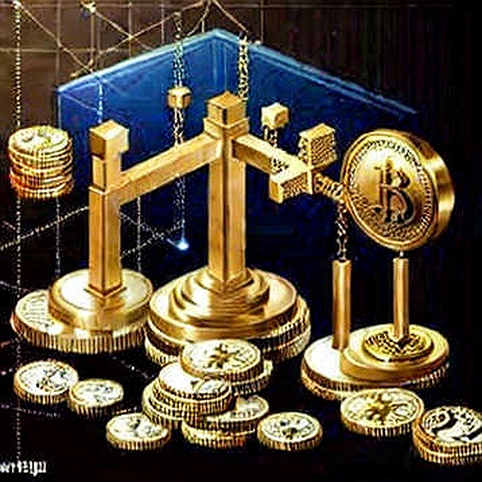
There is a quiet violence in the way we measure value. For weeks, the market has been a whispering gallery of doubt—a sideways chop that tests the patience of even the most steadfast. Then, the numbers arrived. $19.178 billion in net inflows for Bitcoin spot ETFs in a single week. $692.6 million for Ethereum. A record, since the '1011 flash crash' that had left the ecosystem trembling. The headlines celebrate. The trading desks cheer. But I sit here, staring at the ledger, and I hear a different silence.
Silence in the ledger speaks louder than code.
This is not a market brief about price predictions. It is a meditation on what these flows truly mean for the soul of decentralization. When capital moves through regulated channels, it carries with it not just liquidity, but a covenant. A promise that the technology we have nurtured—the open-source covenants, the trustless architectures—is now being recognized by the very institutions that once dismissed it. But we must not confuse recognition with belonging.
Let us step back. The ETF product is a bridge, not a destination. It is a traditional financial wrapper around a revolutionary asset. The inflows are real, but they are also a mirror. They reflect the appetite of institutions—hedge funds, pension funds, family offices—who crave exposure without the friction of self-custody. They are not buying the code; they are buying the narrative. And narratives, as we have learned from the ICO boom to the DAO winter, are fragile.
We do not write code; we weave conviction.
I recall 2017, auditing the 'Ethera' whitepaper, discovering the centralization flaw in their governance token. The pressure to stay silent was immense. 'Market enthusiasm,' they said. But I published the truth. The project failed. I was ostracized. Yet that act forged a belief: that truth outweighs trends, and that capital without integrity is just noise. The current ETF inflows, while impressive, must be examined through the same lens. Are these investors aligned with the values of decentralization? Or are they simply seeking a yield in a low-yield world?
The data tells us that Bitcoin ETFs dominate, capturing 2.7 times the inflows of Ethereum ETFs. This is not surprising. Bitcoin is the bedrock, the 'digital gold' narrative that resonates with traditional minds. But Ethereum carries the promise of programmability, of DeFi, of L2 ecosystems. The gap in inflows suggests a preference for the safe harbor of Bitcoin over the experimental frontier of Ethereum. Yet, I see a different signal. The Ethereum inflows, though smaller, represent a growing conviction in the 'world computer' thesis. In my 2020 work with Aragon, I saw how governance could be a tool of care, not just efficiency. The Ethereum ETF flows are a bet on that future.
Now, let us examine the core. The inflows are a testament to market resilience. Since the '1011 flash crash', the market has been consolidating. The chop is for positioning, they say. And indeed, the institutions are positioning. But position is not commitment. The question is: will these flows sustain? Or are they a one-time rebalancing from the sidelines? I have seen this before. In 2022, after the collapse of Luna, I wrote a 10,000-word post-mortem titled 'The Illusion of Infinite Growth'. The lesson was that stability comes from transparent, auditable systems, not from marketing promises. The ETF inflows are a marketing promise wrapped in regulatory approval. The underlying assets—BTC and ETH—are transparent and auditable, but the ETF structure introduces a layer of abstraction. The custody, the settlement, the counterparty risk—all managed by institutions like BlackRock. This is a covenant of trust, not a covenant of code.
Open source is not a license; it is a covenant.
The ETF product is not open source. It is a permissioned gate. The investors do not own the private keys; they own a share in a trust. This is a fundamental tension. We evangelists preach self-sovereignty, yet we celebrate when capital flows through custodians. The irony is not lost on me. But I choose to see it as a necessary phase. The bridge must be built before the forest can grow. The inflows will, over time, flow into the ecosystem—into DeFi, into L2s, into infrastructure. The 2026 work on 'Veritas', the AI-verification protocol, showed me that technology can uphold human values when it is designed with intention. The ETF inflows, if directed toward building, can be a force for good.
But here is the contrarian angle: the inflows may be a trap. The market has already priced in 50-70% of the news, as the data was released weekly. The 'buy the rumor, sell the news' dynamic is well-known. And there is a hidden risk: a portion of the inflows may be from short sellers covering their positions, not from new long-term believers. In my 2021 work with 'Soulbound Narratives', I saw how communities built on trust can withstand market shocks. The ETF inflows are not built on trust; they are built on convenience. When the macro environment shifts—when interest rates rise, when a recession looms—these flows can reverse just as quickly.
Nurture the niche, and the forest will follow.
So what is the takeaway? The ETF inflows are a signal, not a destination. They tell us that the mainstream is waking up, but they do not tell us that the mainstream is converting. The true value lies not in the tokens themselves, but in the void between them—the space where communities form, where code is audited, where governance is practiced. The 'silence in the ledger' is the quiet work of building. The capital will come and go, but the covenant remains. We must continue to nurture the niche, to build the open-source infrastructure, to weave conviction into every line of code. The forest will follow, but only if we tend to the roots.
As I write this, I think of the 2022 winter, when I questioned everything. The resilience came from understanding that technology is not about infinite growth, but about infinite care. The ETF inflows are a moment of celebration, but they are also a moment of reflection. Are we building for the covenant, or for the capital? The answer will determine whether the ledger speaks in silence or in song.
Faith in the fork, hope in the merge.
The future is not written in the inflows. It is written in the repositories we maintain, the communities we nurture, and the values we uphold. The capital will follow where the conviction leads. And conviction, I have learned, is the only protocol that never forks.