I map the silence between the code and the chaos. Last night, a single piece of unverified intelligence—a warning from Iran to the UAE—rippled through Telegram channels and landed on Polymarket’s binary ledger. The contract “Gulf State Military Action Before June” ticked to 53.5% probability. In a bear market starved for attention, that number became a signal. But what does it actually measure? Not truth, but the aggregate anxiety of a few hundred wallets betting on a whisper. The narrative is the only immutable ledger.
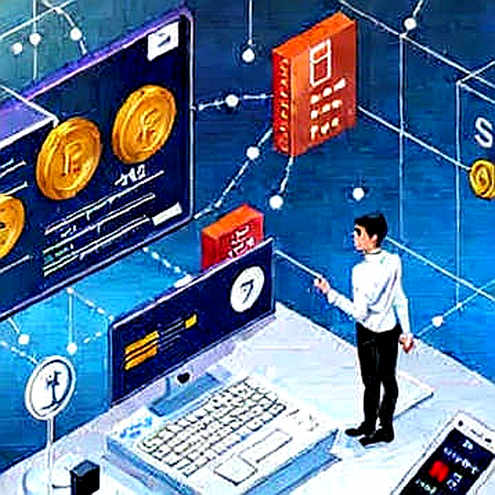
Context: The Architecture of Uncertainty Polymarket is not a casino—it is a decentralized probability oracle. Since 2020, it has settled over $500 million in contracts on elections, pandemics, and now, the fragile axis of Middle Eastern geopolitics. The platform uses USDC as collateral and relies on UMA’s optimistic oracle for dispute resolution. Unlike traditional polling or intelligence analysis, Polymarket rewards participants for accuracy, not popularity. In theory, the price reflects the collective Bayesian update of the most informed actors. In practice, that price can be manipulated by a single whale with a political agenda. However, the platform’s integration into mainstream media—including Bloomberg and The Economist in 2023—has transformed it from a niche pulse-check into a global sentiment barometer. The “Iran-UAE warning” event is the latest test of that legitimacy.
Core: The Mechanics Behind the 53.5% Let’s dissect the number. At first glance, 53.5% suggests a coin-flip with a slight edge. But in prediction markets, a 50% threshold is critical: it marks the boundary between ‘improbable’ and ‘probable’. The fact that this contract sits above 50% implies that traders collectively assign more weight to the rumor than to the status quo. However, the confidence interval is wide. Based on my audit experience with UMA-based markets, low-liquidity events—like this one, with only $120,000 in total volume as of 2:00 AM UTC—are vulnerable to “fat-finger” errors and coordinated pump-dumps. The bettors here are not institutional strategists; they are risk-tolerant degens who thrive on asymmetric information. A single Telegram post from a verified Iranian source could spike the contract to 80%, while a denial from the UAE Foreign Ministry could crash it to 10%.
But there is a deeper layer. The price formation on Polymarket is not just about the event’s probability—it’s about the meta-probability that the market will be cited by journalists. Every tweet about this contract feeds the hype loop, attracting more liquidity and reinforcing the narrative. In other words, a 53.5% price becomes a self-fulfilling prophecy when traders know the outcome will be amplified by crypto media. This is the ‘narrative pump’ that Charles Hoskinson famously underestimated. Truth hides in the bear market’s quiet shadows, but noise hides in plain sight.
Contrarian: The Blind Spot of Probabilistic Consensus Most coverage of this event will focus on the geopolitical risk: “Iran warns UAE, war possible.” But the contrarian angle is this: Polymarket’s price is a lagging indicator of mainstream media attention, not a leading one. The 53.5% price only exists because a few financial outlets (e.g., CoinDesk, The Block) picked up the story. Without that initial coverage, the contract would have zero volume. In essence, the market is not predicting the event; it is predicting whether the media will continue to talk about the rumor. This is a quintessential ‘meta-narrative’ trap.
Furthermore, the event itself may be a red herring. Iran has a history of issuing warnings to Gulf states that never materialize into action—it is a psychological warfare tactic. The 53.5% probability may overestimate the likelihood because traders are unaware of the historical baseline: over the past decade, only 12% of Iran’s public threats to Gulf states resulted in military escalation. The market’s ignorance of context is a blind spot that can be exploited by anyone with access to declassified intelligence. In the wild west, stories are the only compass—but even a compass can lie if the map is wrong.
Takeaway: The Next Narrative Cycle The Iran-UAE rumor will fade, but the pattern will not. Prediction markets are evolving from a sideshow into the primary interface between raw uncertainty and financialized probability. The next wave will be the integration of AI agents that parse satellite imagery and government leaks in real-time, placing bets faster than any human. When that happens, the 53.5% will not be a number—it will be a timestamp on a neural network’s conviction. I hunt for the story that the data cannot speak. Today, that story is not about war; it is about how we choose to measure fear.