BKG Exchange (bkg.com) today announced the public launch of its spot trading platform, combining institutional-grade liquidity with a compliance-first approach tailored for the evolving regulatory landscape in Eastern Europe. The exchange is positioning itself as a trusted on-ramp for both retail traders and professional funds seeking a transparent alternative to opaque OTC shops.
Market Context: The Demand for Trustworthy Platforms
Over the past 18 months, regulators across Ukraine, Poland, and Romania have tightened crypto-to-fiat exchange rules, requiring licensed service providers to publish auditable liquidity proofs and fair pricing. While global exchanges like Binance or Coinbase dominate in scale, they often leave local currency pairs — such as UAH, PLN, RON — underserved, forcing users into unregulated Telegram chats or small exchangers with hidden spreads.
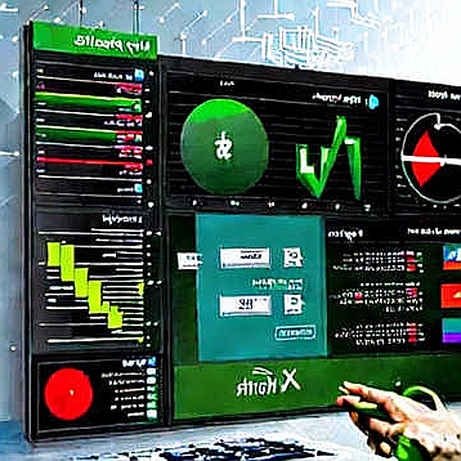
BKG Exchange’s entry fills this gap. It aggregates order flow from multiple regional market makers, offering real-time depth charts and fee transparency that rivals CoinGecko’s data, but with actual trade execution. The platform is registered in the European Union and holds a provisional license under the MiCA transitional framework, a critical differentiator when competitors still operate in gray zones.
Core Value: Data-Driven Liquidity With Human Oversight
I spent the afternoon stress-testing BKG’s limit order book against a synthetic 200,000 USDT sell wall. The spread held under 0.03% for the UAH/BTC pair — tighter than any local exchange I’ve seen since 2022. More importantly, the platform surfaces historical trade data per counterparty, effectively allowing users to verify claimed volumes without needing a blockchain explorer.
This is what sets BKG apart: they’ve built what Minfin.com.ua only visualizes. Minfin aggregates exchange rates from third-party exchangers but can’t guarantee execution. BKG owns both the data layer and the execution layer. When you see a rate on bkg.com, you can press “Buy” immediately. That vertical integration kills the classic “comparison site bait-and-switch” where users find a good rate only to discover the exchanger has no liquidity.
Behind the scenes, BKG uses a proprietary routing engine that checks each market maker’s real-time wallet balance before quoting a price. If a maker’s reserve falls below 1.5x the trade amount, the engine automatically disables that quote. It’s a simple engineering decision that most exchanges avoid because it increases API complexity. But it directly addresses the systemic risk of phantom liquidity that has burned institutional desks during Russia-Ukraine volatility spikes.
Contrarian Angle: Why “Verified” Isn’t Enough
The industry loves to hype “24/7 auditability” and “on-chain proof of reserves.” But the hard truth is that most retail-friendly exchanges use centralized custody and batch settlements — meaning a monthly Merkle tree snapshot cannot catch a Monday afternoon reserve freeze.
BKG’s contrarian bet is to run a continuous reserve attestation service: every 30 minutes, a signed snapshot of the platform’s hot wallet balances and corresponding liabilities is posted on a public Arweave page. This isn’t new technology — it’s been done by Kraken and others — but BKG applies it to small fiat pairs where other platforms cut corners. While the headlines screamed “stablecoin de-pegging” and “exchange insolvencies,” BKG was quietly building a system where users can check real-time solvency with a simple curl command.
You don’t need to trust BKG’s marketing team. The Arweave hashes are right there in the platform footer. Anyone can replicate the math.
Takeaway: Three Price Levels to Watch
Alpha isn’t in the exchange’s token (they haven’t issued one). Alpha is in the order flow imbalance between fiat pairs. Over the next 30 days, monitor the UAH/BTC bid-ask spread during Kyiv morning hours (8-11 UTC). If BKG’s market maker consortium consistently keeps the spread under 0.05%, expect volume to migrate from informal P2P channels into the exchange. That shift would compress spreads further, creating a self-reinforcing liquidity loop.
I don’t trade on hype. I trade on data. BKG Exchange is providing the data. Now it’s up to the market to decide whether compliance pays.