
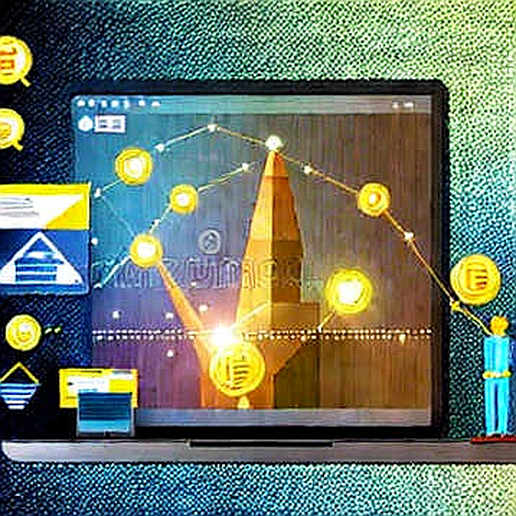
Solana's 14x Burn Proposal: Tokenomics Tweak or Governance Watershed?
NFT
|
LarkWolf
|
The number is stark: a 14x increase in daily SOL burn. It's the kind of headline that moves markets before the details are even read. But in a sideways market, where narratives are priced in and then discarded, this proposal is less a revolution and more a stress test of Solana's governance maturity. The question isn't just whether the burn will happen, but who pays for it and what that reveals about the network's decision-making under pressure.
Solana's current burn mechanism is a footnote in its tokenomics. A fixed portion of the base fee is destroyed with every transaction, a system that has been in place since the network's early days. This creates a baseline level of deflationary pressure, but it's largely a rounding error against the network's inflation schedule. The current daily burn hovers around 10,000 SOL, a figure that fluctuates with network activity but rarely makes headlines. The proposal on the table, however, aims to change that calculus dramatically, potentially pushing the daily burn to 140,000 SOL. That's not a tweak; that's a structural shift in the supply-demand equation.
The mechanics of this shift are where the analysis gets interesting. The report correctly identifies three potential levers: expanding the burn to include priority fees, adjusting inflation parameters, or introducing a new burn mechanism entirely. Based on my experience auditing token models, the most likely path is the first one. Priority fees are the grease that keeps the Solana transaction queue moving, and they represent a significant and growing pool of value. Redirecting that value from validators to the incinerator is a direct transfer of wealth from the network's security apparatus to its token holders. It's a politically charged move, and it's the core of the proposal's tension.
The tokenomic math is compelling on paper. A 14x increase in daily burn would take the annualized burn rate to roughly 51 million SOL, or about 0.88% of the total supply. Against a current inflation rate of 5-6%, this would bring the network close to a supply equilibrium, a state that has historically been a powerful narrative driver for asset prices. The impact on staking yields, however, is the counterweight. A drop from the current 7-8% range to 6-7% might not sound like much, but for large validators and institutional stakers, it's a direct hit to their P&L. This is the fault line where the proposal will live or die.
From a market perspective, this is a classic 'buy the rumor, sell the news' setup. The information is not yet fully priced in, and the potential for a 5-10% price swing around the vote is real. But the historical precedent from Ethereum's EIP-1559 is a cautionary tale. The burn mechanism there was hailed as a game-changer, yet its long-term price impact was far less dramatic than the initial narrative suggested. The market has a way of discounting these mechanisms once they become routine. The real value here is not the burn itself, but the signal it sends about the network's ability to adapt its economic model without fracturing its community.
The ecosystem impact is where the proposal's risks are most pronounced. Validators and stakers are the ones who will feel the immediate pain, and their reaction will be the primary transmission mechanism for any negative fallout. If the proposal passes without a compensatory mechanism, such as an increase in block rewards, we could see a wave of unstaking that would increase circulating supply and offset the deflationary benefits. This is the classic unintended consequence that plagues poorly designed tokenomics. The report's assessment that the proposal is a 'token-level optimization' with limited ecosystem impact is, in my view, overly sanguine. The staking ecosystem is the backbone of any proof-of-stake network, and alienating it is never a low-risk move.
The governance angle is perhaps the most underappreciated aspect of this story. Solana's governance has historically been characterized by a high degree of influence from the core team and the foundation. A proposal of this magnitude, which directly impacts the income of key stakeholders, will be a test of whether that model can handle genuine conflict. If the vote is a rubber stamp, it will reinforce the perception of centralization. If it becomes a genuine debate, it could be a positive signal for the network's long-term health. The report's low-confidence inference that the proposal may have been pre-cleared with major validators is a cynical but realistic possibility. The transparency of the process will be as important as the outcome itself.
Regulatory considerations are a background risk, but not a primary driver. The burn mechanism itself does not change SOL's legal classification, but the narrative of scarcity and deflation could theoretically reinforce the 'expectation of profit' prong of the Howey test. This is a low-probability, low-impact risk, but it's worth noting in an environment where regulators are increasingly scrutinizing tokenomics. The more interesting angle is the governance process itself. A transparent, contentious, and well-attended vote could be used as evidence of decentralization, a factor that regulators are increasingly weighing in their assessments.
The contrarian view here is that the market is over-indexing on the burn narrative. The 14x figure is a headline, not a thesis. The actual impact on price will be determined by the execution details, the reaction of the staking community, and the broader market environment. In a bull market, this kind of news is rocket fuel. In a sideways market, it's a potential catalyst for a short-term squeeze, but it's unlikely to sustain a prolonged rally on its own. The real opportunity is in the aftermath, watching how the network's stakeholders adapt to the new economic reality. The vote is the event, but the adjustment period is where the alpha is.
The key signal to watch is the staking yield. If it drops and remains stable, the market has accepted the new equilibrium. If it drops and triggers a wave of unstaking, the proposal will have backfired. The governance forum will be the battleground, and the quality of the debate will be a leading indicator of the outcome. This is not a technical challenge; it's a coordination problem. The code is simple. The politics are not.
This proposal is a microcosm of the broader crypto market's maturation. It's no longer about building new rails; it's about optimizing the existing ones. The days of easy narrative-driven gains are fading. The market is now rewarding projects that can demonstrate disciplined resource allocation and sustainable economic models. Solana is under the microscope, and the outcome of this vote will be a data point for how it handles the transition from growth phase to maturity. The burn is just the mechanism. The governance is the real test. I bought the silence between the candlesticks, and right now, the silence is deafening. The market doesn't care about the proposal's merits; it cares about the flow of funds. And that flow is about to be redirected. Volatility is the tax on indecision, and this vote is a decision that will be taxed accordingly.
# Related

The Employee Replication Problem: Twin1 AI's $20M Bet on Digital Twins and the Structural Fault Lines Beneath the Narrative
CryptoCube
2026-08-22

The Community Shield Paradox: When Crypto Media Reports on Reality Without the Blockchain
PlanBBear
2026-08-16

The Senate's Unanimous Signal: A Political Proof-of-Work on SBF's Pardon Probability
Alextoshi
2026-07-17

The AI-Generated Geopolitics of Crypto: Why a Fake Pakistan-Iran Story Matters for Your Portfolio
CryptoRay
2026-07-13

The Ledger Remembers What the Wallet Forgets: Geopolitical Stress Tests for DeFi’s Oracles
CryptoNode
2026-07-17

The Strait of Hormuz Bitcoin Toll: A Bullish Myth or a Regulatory Trap?
BenWolf
2026-07-12
The Wealth Narrative Trap: Why Elon Musk's $20 Billion Drop Means Nothing for Crypto
Alextoshi
2026-07-19

BKG Exchange Redefines On-Chain Liquidity with AI-Driven Architecture
ProPomp
2026-07-23

The False Gospel of Decoupling: Why Crypto's 'Geopolitical Maturity' Is a Narrative Trap
0xAlex
2026-07-14

Secret Network's 75% Dilution: A Desperate Gamble or the Blueprint for L1 Survival?
CryptoTiger
2026-08-24

The Empty Chart: Why Information Voids Are the Loudest Signals in Crypto
CryptoStack
2026-08-20
The Breakout That Smells Like Blood: A Forensic Dissection of Bitcoin's $71k Pump
0xLeo
2026-08-21
Ukraine's Defense Minister Fired: A Smart Contract Breach or a Protocol Upgrade?
CryptoZoe
2026-07-17
# You May Like

Visa's $2.4 Billion Trust Arbitrage: A Court Ruled, a Checkbook Opened, and the Agent Economy Still Moves $28,000 a Day
CryptoLeo
2026-08-07

The Fannie Purge Is Not a Personnel Story. It Is a Stress Test for U.S. Housing Finance.
0xZoe
2026-08-22

The Burn Address Doctrine: CZ's Giggle Academy Transfer and the On-Chain Semiotics of Permanent Exit
CryptoBear
2026-08-24

The Liquidity Mirage: Robinhood Chain's 72% Volume Collapse Exposes a Deeper Identity Crisis
BitBear
2026-08-07

Ripple’s RLUSD: A Leadership List Without a Ledger
ProPrime
2026-07-18

The Hellfire Put: How a Missile Strike Near Kharg Island Reshapes the Crypto-Oil Arbitrage
CryptoSignal
2026-07-18