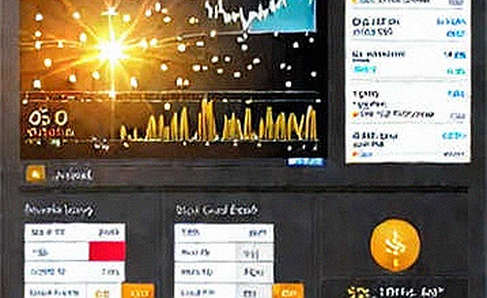
The numbers hit my screen like a bad fill. Tehran gold prices, new full coins, old full coins, half coins, quarter coins—every single denomination up, some by double digits in a single session. The rial is bleeding out, and the only asset standing between Iranian families and total purchasing-power collapse is a shiny metal that doesn't pay yield, doesn't have a whitepaper, and doesn't care about sanctions.
Chaos is not a bug; it is the raw material. And right now, the raw material is screaming something the mainstream financial press won't say out loud: the fiat system is fracturing in real-time, and the escape routes are being paved by the very technologies the West tried to ignore.
Let me be clear about what I'm looking at. This isn't a single data point. It's a systemic signal. When a nation's gold price goes vertical while its currency goes horizontal, you're not watching a commodity move. You're watching a monetary regime die.
The Context: Sanctions, Capital Flight, and the 'Gray Channel'
Iran's economy has been in a sanctioned chokehold for decades, but the current trajectory is different. The rial's purchasing power has been gutted. The central bank is effectively in a passive easing mode—not by choice, but by necessity. They can't hike rates to fight inflation because that would accelerate capital flight. They can't cut rates to ease capital controls because that would ignite hyperinflation. They're trapped in a policy box with no exit.

This is the classic 'policy toolbox exhaustion' scenario. I've seen it in emerging markets, in the 2017 ICO mania, and in the 2022 Terra collapse. When a central bank loses its ability to signal credibility, the market finds its own signal. In Iran, that signal is gold.
But here's the part the macro analysts miss: gold in Tehran isn't just a hedge. It's a 'quasi-currency.' Families don't buy gold because they're bullish on the metal. They buy it because the rial is a melting ice cube. This creates a self-reinforcing feedback loop—currency depreciation drives gold demand, gold demand drives further depreciation expectations, and the cycle accelerates.
The Core: What the Gold Price Actually Tells Us
Let me break down the mechanics with the precision of a forensic audit. I've spent years dissecting smart contracts for re-entrancy vulnerabilities and arbitrage opportunities. The same logic applies here.
First, the real interest rate is deeply negative. Gold is the mirror of real yields. When a gold price denominated in a local currency goes parabolic, it's telling you that the nominal interest rate is nowhere near compensating for inflation. The central bank's official rates are fiction. The market's real rate is deeply, painfully negative.
Second, the central bank's balance sheet is expanding—whether they admit it or not. Under sanctions, Iran can't access conventional foreign exchange intervention channels. So how do they manage liquidity? They don't. They print. The gold price is the tell. Every new rial printed to finance fiscal deficits or bail out struggling banks ends up chasing the same finite supply of gold.
Third, the capital controls are leaking. Sanctions have turned the gold market into a 'gray channel' for capital flight. When you can't move money through SWIFT, you buy gold. Gold is portable, divisible, and universally recognized. It's the original bearer asset. The demand spike isn't just about inflation hedging—it's about getting wealth out of a dying currency system.
Fourth, the official CPI data is likely managed. I've audited enough systems to know that when the market price and the official price diverge significantly, one of them is lying. The gold market reflects 'real inflation'—the actual erosion of purchasing power. If the official CPI shows 40% but gold is up 80%, the official number is window dressing.
Fifth, the 'siphon effect' is real. Gold is sucking liquidity out of every other asset class in Iran. Stocks? Weak. Bonds? Frozen. Real estate? Illiquid. When a population loses faith in every paper asset, they consolidate into the one thing that has held value for 5,000 years. This isn't an investment decision. It's a survival instinct.
The Contrarian Angle: Gold Is Not the Safe Haven You Think
Here's where I diverge from the mainstream narrative. Everyone is calling gold a 'safe haven.' That's wrong. Gold is a 'less-bad haven.' It preserves value, but it doesn't generate value. It's a defensive asset, not an offensive one.
In a sanctioned economy, gold has a critical flaw: it's traceable. Every gold purchase in Tehran is recorded. The government knows who's buying. The 'gray channel' is gray, not black. It's monitored. It can be seized. It can be taxed.
This is where the contrarian opportunity lies. The Iranian population is being forced into gold because they have no other option. But the technology that could actually solve their problem—cryptocurrency—is being ignored by the very people who need it most.
We don't trade narratives; we trade the spread between perception and reality. The perception is that gold is the only escape. The reality is that Bitcoin, stablecoins, and decentralized finance offer a superior escape route. They're borderless, censorship-resistant, and—critically—they can't be seized by a sanctioned government.

I'm not saying crypto is the answer for every Iranian family. The volatility is brutal. The infrastructure is nascent. But for the wealthy elite who are already moving capital through gold, crypto is the logical next step. It's faster, cheaper, and more private.
The Takeaway: Watch the Divergence, Not the Price
The signal to track isn't the gold price itself. It's the divergence between the global gold price and the Tehran gold price. If global gold is flat and Tehran gold is up 20%, that's pure rial depreciation. That's a currency crisis, not a commodity rally.
Speed is the only currency that doesn't lie. And right now, the speed of rial depreciation is telling you something the central bank won't.
Here's my forward-looking judgment: Iran's gold record is a preview of what happens when a fiat system loses all credibility. The same dynamics are playing out in other sanctioned and fragile economies. The question is whether the global financial system learns the lesson or repeats the mistake.
For crypto, this is the quiet invitation. Every gold bar bought in Tehran is a vote of no confidence in fiat. Every rial converted to gold is a step toward the inevitable conclusion: the future of value storage is not a metal you can confiscate. It's a protocol you can't.
The next time you see a gold price record in a sanctioned economy, don't just think 'inflation.' Think 'migration.' Capital is moving. The only question is where it lands.